The brown ring on the ceiling is the obvious one. By the time it appears, water has usually been getting in for a while — through a season or two of storms, quietly soaking insulation and decking before it ever reached drywall.
The earlier signs are inside your house, and most of them don't look like water at all.
In the living space
A door or window that suddenly sticks. Framing swells when it absorbs moisture. If an interior door that closed fine all spring starts binding at the top, and nothing else has changed, moisture is a real candidate.
Nail pops or hairline cracks along a ceiling seam. Drywall moves as it takes on and releases moisture. A line of small pops appearing along a single seam is worth tracing.
Paint that's blistering, bubbling, or peeling on an upstairs wall. Especially near the ceiling line or around where a chimney passes through. Water inside the wall pushes paint off from behind.
A musty smell that comes and goes with the weather. If a closet, upstairs hallway, or spare room smells different after it rains and then fades, that's a strong signal — you're smelling something wet drying out between storms.
Discoloration that isn't a defined stain. Early water shows up as a faint yellowing or a slightly different sheen, often visible only in raking light from a window. Look at your ceilings at a low angle in the morning.
Higher cooling bills without a usage change. Wet insulation doesn't insulate. A chronic slow leak degrades attic insulation in a specific area, and a Texas summer makes that expensive in a hurry.
In the attic — where it actually shows first
If you can safely access your attic, this is where a leak announces itself long before the ceiling does. Go on a bright day, and bring a flashlight anyway.
Daylight through the decking. Any pinpoint of light where there shouldn't be one.
Dark streaks or staining on the underside of the decking or on rafters. Water leaves a trail. Follow it uphill — the entry point is above where the staining starts, never below.
Rusted nail tips. Nails coming through the decking should be clean. Rusted, dripping, or frosted-looking tips mean moisture is condensing or entering there.
Compressed, discolored, or clumped insulation. Insulation that looks flattened in one area, or is darker than its surroundings, has been wet.
Any white or gray fuzzy growth on wood. Stop and get it looked at.
Around specific features, because that's where leaks start
Roof leaks cluster at penetrations, not in the open field of shingles. Pay attention to ceilings and walls near:
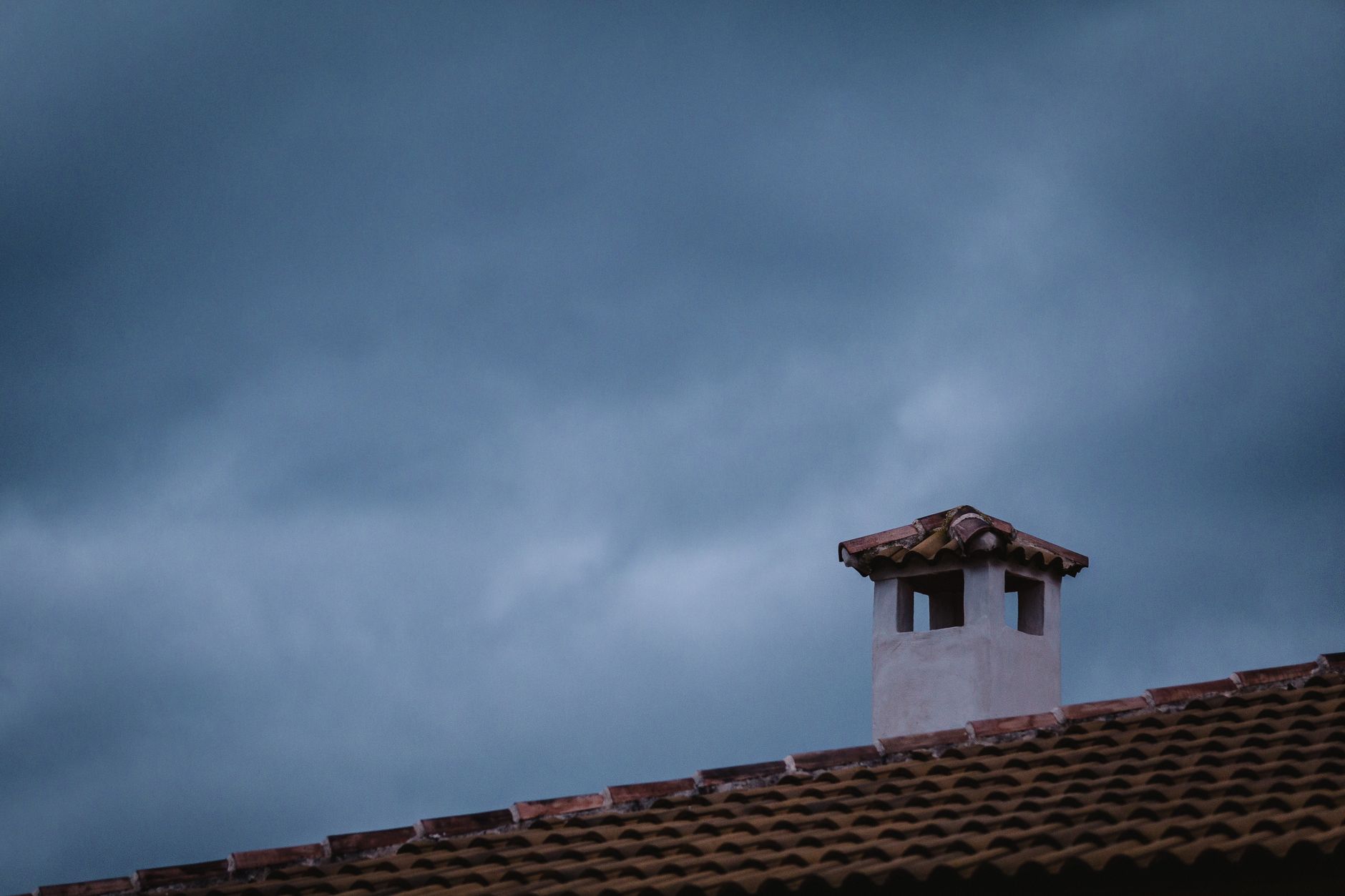
Chimneys — flashing at a chimney is the most common leak location on a house, and staining usually shows on the wall beside it rather than the ceiling.
Bathroom and kitchen ceilings — plumbing vents penetrate the roof above them, and the rubber pipe boots sealing those vents are typically the first thing on a roof to fail in Texas sun.
Skylights — around the frame, and on the wall directly below.
Where a second story meets a first-story roofline — roof-to-wall transitions are a flashing detail, and a failed one often shows up as a stain low on an interior wall rather than a ceiling.
Why the stain is never where the hole is
Water enters at a penetration, hits the decking, and runs along it until it finds a seam, a joist, or a nail to drip from. That can be several feet from where it came in, and it can move sideways along a rafter before it ever drops.
This is why "we patched the spot above the stain" often doesn't work. The patch went where the water exited, not where it entered.
What to do when you spot one of these
Photograph it, note the date, and note the weather. If it's tied to rain, that pattern is diagnostic on its own.
Don't paint over it. A stain that's been covered can't tell you whether it's growing, and it can't tell an adjuster anything either.
Then get it inspected. A small entry point found in August is a boot replacement. The same entry point found next spring is decking, insulation, and drywall.
Blue Ribbon Roofing has traced North Texas leaks back to their source since 1993, across McKinney, Allen, Plano, Frisco, Prosper, Melissa, and Van Alstyne. Inspections are free — and if what you're seeing isn't the roof, we'll tell you that too.